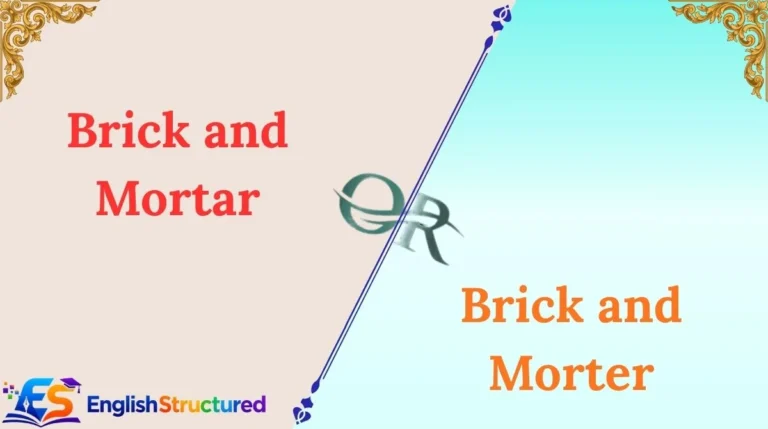
Brick and Mortar or Brick and Morter
This is a common spelling mistake because “mortar” does not sound exactly the way it looks.
When people hear the phrase in fast speech, they may write “morter” because it seems like a natural spelling.
The correct expression is “brick and mortar.” The word mortar is spelled with an a, not an e. “Brick and morter” is a misspelling and should not be used in standard English.
This phrase is also more than a simple spelling question. Brick and mortar has a special meaning in modern English.
It usually describes a business, store, school, bank, or other organization that has a real physical location where people can visit.
It is often used when comparing a traditional physical business with an online business.
For example, you might say, “The company started online but later opened a brick-and-mortar store.”
Understanding this phrase can help you with business English, everyday writing, shopping conversations, websites, and formal communication.
By the end, you will know the correct spelling, meaning, grammar, punctuation, common mistakes, and natural ways to use the expression.
What Does “Brick and Mortar” Mean?
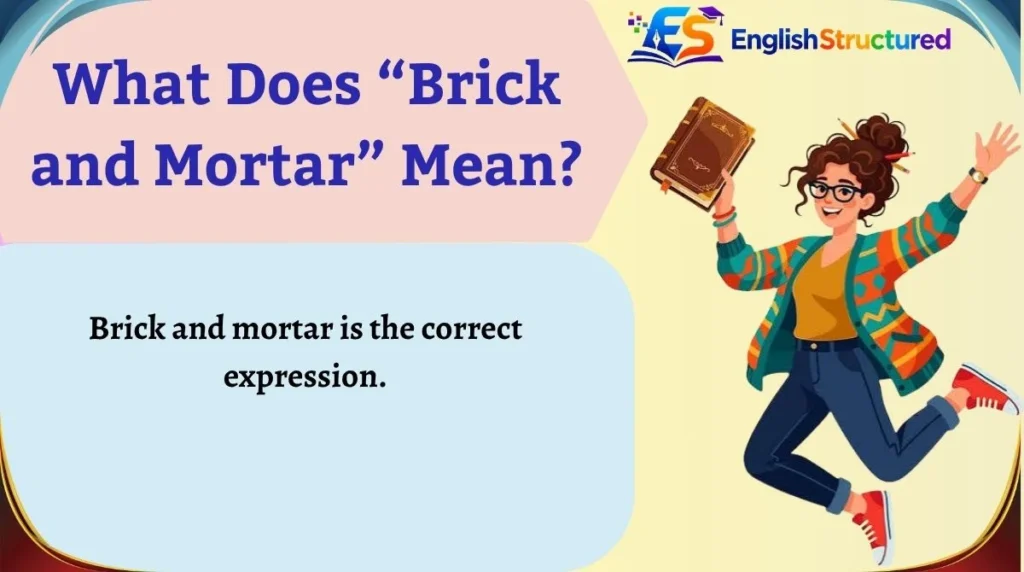
Brick and mortar is the correct expression.
The phrase originally refers to the physical materials used to build walls. Bricks are hard building blocks, while mortar is the material placed between bricks to hold them together.
Over time, the phrase developed a broader meaning. Today, brick and mortar often describes a business that operates from a physical building or store, rather than existing only online.
For example:
Brick and Mortar or Brick and Morter
Here, “brick-and-mortar” means that customers can visit a real physical location.
When Should You Use “Brick and Mortar”?
Use brick and mortar when you are talking about a physical place of business or, more generally, a traditional physical establishment.
You may hear the phrase when people talk about:
- Retail stores
- Restaurants
- Banks
- Schools
- Bookstores
- Clothing shops
- Grocery stores
- Pharmacies
- Offices
- Service businesses
The expression is especially common when comparing online businesses with physical businesses.
For example:
Brick and Mortar or Brick and Morter
This means many customers still prefer stores they can physically visit.
Is “Brick and Mortar” a Noun or an Adjective?
The phrase can work in different ways depending on the sentence.
When used as a noun phrase, it can refer to physical business locations:
Brick and Mortar or Brick and Morter
However, this use is less common in everyday speech.
More often, brick-and-mortar acts as a compound adjective before a noun:
“They opened a brick-and-mortar store.”
“She owns a brick-and-mortar business.”
“The brand has several brick-and-mortar locations.”
Notice the hyphens in these examples. When the phrase directly describes a noun, brick-and-mortar is commonly written with hyphens.
Examples of “Brick and Mortar”
- Brick and Mortar or Brick and Morter
- “Some shoppers prefer brick-and-mortar shops because they can see products before buying them.”
- “The business does not have a brick-and-mortar location.”
- “The owner plans to open a brick-and-mortar bakery next year.”
- “Online shopping has changed the way brick-and-mortar retailers operate.”
- “The bank has both online services and brick-and-mortar branches.”
- “Customers can order online or visit the company’s brick-and-mortar store.”
- Brick and Mortar or Brick and Morter
Common Learner Confusion
The biggest problem is spelling mortar.
Many learners write:
❌ brick and morter
The correct spelling is:
Brick and Mortar or Brick and Morter
Remember that mortar contains the letter a.
Another source of confusion is the phrase’s meaning. A learner may think “brick and mortar” always means an actual wall made from bricks. In modern business English, however, it often means a physical business location.
What Does “Brick and Morter” Mean?
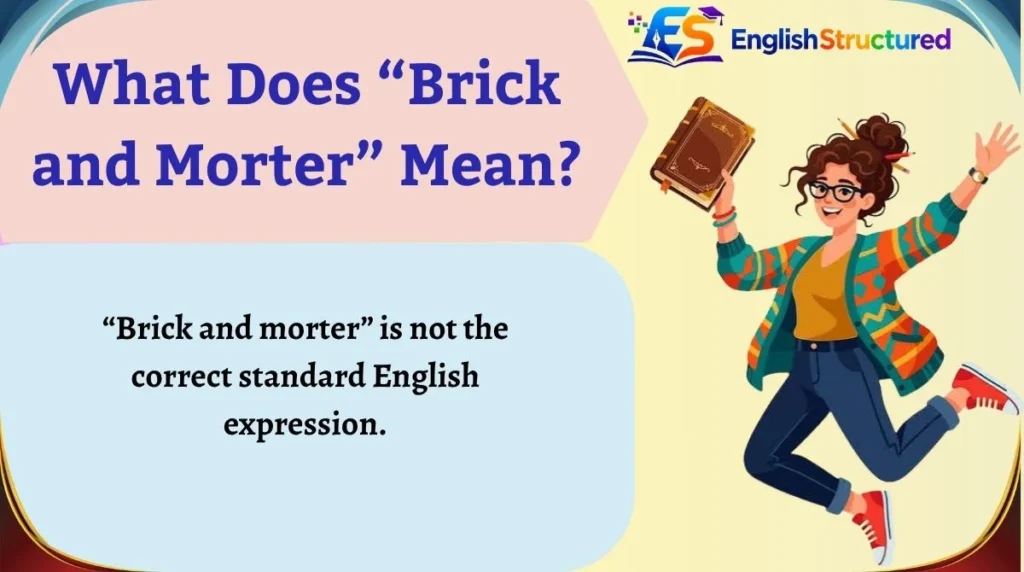
“Brick and morter” is not the correct standard English expression.
The word morter is a misspelling of mortar. If you are writing an article, email, school assignment, business document, or website content, you should use mortar.
So:
❌ brick and morter
✅ brick and mortar
The mistake is understandable because the pronunciation can make the final part sound like “ter.” English spelling does not always match pronunciation perfectly, so learners sometimes spell the word according to the way they hear it.
Why Do People Write “Morter”?
English has many words whose sounds can make spelling difficult. Mortar is one of them.
When spoken naturally, the second syllable may not sound like a clear “ar” to every listener. A learner may hear something closer to “morter” and spell it that way.
This is a spelling error, not a different English word with a different meaning.
For example:
❌ The company has a brick-and-morter shop.
Correct it to:
✅ The company has a brick-and-mortar shop.
Is “Morter” Ever Correct?
In standard modern English, morter is not the spelling you should use for the building material or the business expression.
The correct word is:
mortar
It refers to a material used to join bricks, stones, or other building materials.
The word also appears in the fixed expression:
Brick and Mortar or Brick and Morter
Correct Examples
- Brick and Mortar or Brick and Morter
- “We are looking for a brick-and-mortar retailer.”
- “The company moved from online sales to a physical brick-and-mortar store.”
- “Brick-and-mortar businesses face different costs from online businesses.”
- “The restaurant has no online-only location; it is a traditional brick-and-mortar business.”
- “Some customers enjoy visiting brick-and-mortar stores.”
- “The brand plans to open its first brick-and-mortar shop.”
- “Online retailers sometimes create brick-and-mortar locations to reach local customers.”
A Simple Spelling Reminder
If you are unsure, remember:
Brick and Mortar or Brick and Morter
It has an A after the T.
So the complete expression is:
brick and mortar
Not:
brick and morter
Difference Between “Brick and Mortar” and “Brick and Morter”
The difference is simple: one is correct, and the other is a spelling mistake.
| Expression | Correct? | Meaning |
|---|---|---|
| brick and mortar | ✅ Yes | A physical building or physical business location |
| brick and morter | ❌ No | Misspelling of “brick and mortar” |
| brick-and-mortar | ✅ Yes | Hyphenated form used before a noun |
| brick-and-morter | ❌ No | Incorrect spelling |
1. Spelling Difference
The correct word is mortar.
Brick and Mortar or Brick and Morter
The incorrect version is:
❌ brick and morter
There is no standard English spelling morter for this expression.
2. Meaning Difference
There is actually no real meaning difference between the two versions because “brick and morter” is simply an incorrect spelling.
Brick and Mortar or Brick and Morter
3. Grammar Difference
The phrase can appear with or without hyphens depending on how it is used.
Before a noun, the compound adjective is commonly written:
“a brick-and-mortar store”
After the noun, it may appear without hyphens:
Brick and Mortar or Brick and Morter
You may also see style variations in published writing. Different style guides and publishers can handle compound expressions somewhat differently. However, brick-and-mortar before a noun is a very clear and widely accepted form.
4. Sentence Structure
Compare these:
Brick and Mortar or Brick and Morter
Here, the expression describes the noun store, so the hyphens make the phrase work as one compound modifier.
Now compare:
Brick and Mortar or Brick and Morter
Again, the phrase functions as a combined adjective.
The key point is not to confuse the spelling of mortar with morter.
Grammar Rules You Must Remember
Rule #1: Always Spell It “Mortar”
The first and most important rule is simple:
Mortar is spelled M-O-R-T-A-R.
Do not replace the second a with e.
❌ brick and morter
Brick and Mortar or Brick and Morter
This applies whether you are talking about construction or business.
Rule #2: Use “Brick-and-Mortar” Before a Noun
When the phrase works as a compound adjective directly before a noun, hyphens are commonly used.
For example:
Brick and Mortar or Brick and Morter
Brick and Mortar or Brick and Morter
“The company opened a brick-and-mortar location.”
The hyphens connect the words and show that they work together to describe the following noun.
Rule #3: “Brick and Mortar” Can Refer to Physical Businesses
In modern English, the phrase often has a business meaning.
For example:
“The brand has moved beyond online sales and now operates brick-and-mortar stores.”
The phrase tells us that customers can visit a physical location.
This is especially useful when comparing e-commerce and traditional retail.
Rule #4: Do Not Treat “Morter” as an Alternative Spelling
“Morter” is not a casual alternative that you can use in informal writing.
For standard English, use:
mortar
For business writing:
Brick and Mortar or Brick and Morter
For general reference:
brick and mortar
Using the correct spelling is important in schoolwork, professional writing, website content, applications, and formal communication.
Common Mistakes Students Make
Many spelling mistakes happen because students write words based on sound instead of spelling. That is probably the main reason “morter” appears.
Mistake 1: Writing “Morter”
Incorrect:
❌ The company has a brick-and-morter shop.
Correct:
Brick and Mortar or Brick and Morter
Correction tip: Memorize mortar as a complete word rather than trying to spell it from pronunciation.
Mistake 2: Forgetting the Hyphens
A learner may write:
❌ a brick and mortar store
This form is often seen, and many readers will understand it. However, when the phrase is functioning as a compound adjective before store, the clearest standard form is:
✅ a brick-and-mortar store
The hyphens show that the whole phrase describes “store.”
Mistake 3: Thinking the Phrase Only Refers to Walls
A student might say:
Brick and Mortar or Brick and Morter
That is not necessarily what the modern phrase means.
A brick-and-mortar business simply has a physical location. The building does not have to be literally made from bricks.
For example, a modern store made mainly from concrete and glass can still be called a brick-and-mortar store.
Mistake 4: Using “Morter” Because It Sounds Right
English pronunciation can be tricky.
Words are not always spelled exactly as they sound. Instead of guessing, remember the spelling visually:
MORTAR
A useful habit is to type the word slowly when you are learning it.
Mistake 5: Thinking “Brick and Mortar” Means the Opposite of “Online”
The phrase often contrasts with an online business, but the two are not always complete opposites.
A company can have:
- An online store
- A physical store
- Both online and physical stores
For example:
Brick and Mortar or Brick and Morter
This means the company operates in both spaces.
Easy Trick to Remember the Difference
Here is a simple memory trick:
Mortar has an A, just like “wall.”
Think about a wall being built:
brick + mortar = wall
Now remember the spelling:
MORTAR
Not MORTER.
You can also break the phrase into two ideas:
Brick and Mortar or Brick and Morter
Mortar = material that holds the blocks together
Together:
brick and mortar
Later, the phrase became associated with a physical place of business.
So when you see:
“brick-and-mortar store”
Think:
A real store you can walk into.
Imagine an online store on your phone. You can browse products without leaving home.
Now imagine a physical shop with doors, shelves, products, and employees. That is a brick-and-mortar store.
This simple picture makes the modern meaning easy to remember.
Daily Life Examples
The expression is common in business, shopping, and everyday conversations.
Example 1: Shopping
A: “Do they have a physical store?”
B: “Yes, they have several brick-and-mortar locations.”
Brick and Mortar or Brick and Morter
Example 2: Online Business
A: “Does your company have a shop customers can visit?”
B: “Not yet. We are online only.”
The speaker could also say:
“We do not have a brick-and-mortar location yet.”
Example 3: Opening a Store
“After two years of selling online, Maria opened her first brick-and-mortar store.”
This means Maria created a physical shop.
Example 4: Comparing Businesses
Brick and Mortar or Brick and Morter
Here, the phrase refers to traditional physical stores.
Example 5: Banking
“Some customers still prefer brick-and-mortar banks because they like speaking with employees in person.”
The phrase refers to banks with physical branches.
Example 6: Clothing
“I bought the jacket from a brick-and-mortar clothing store.”
The buyer visited a physical store.
Example 7: Books
“The bookstore competes with large online retailers.”
You could also say:
Brick and Mortar or Brick and Morter
Example 8: Restaurant Business
“The chef started with a food website and later opened a brick-and-mortar restaurant.”
The restaurant has a physical location.
Example 9: Business Advice
“Before opening a brick-and-mortar shop, calculate your rent and operating costs.”
The speaker is talking about a physical business.
Example 10: Everyday Conversation
A: “Do you usually shop online?”
B: “Sometimes, but I still like brick-and-mortar stores because I can try things before buying them.”
This is a natural conversational use.
Practice Section
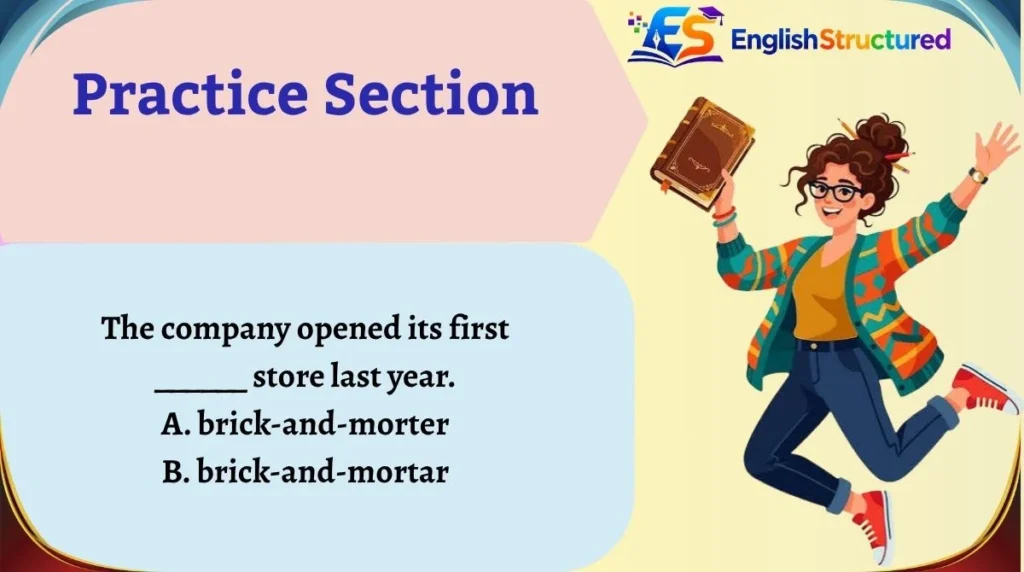
Choose the correct option in each sentence.
1. The company opened its first ______ store last year.
A. brick-and-morter
B. brick-and-mortar
2. We visited a traditional ______ shop downtown.
A. brick and mortar
B. brick and morter
3. The brand operates both online and ______ locations.
A. brick-and-mortar
B. brick-and-morter
4. Which spelling is correct?
A. mortar
B. morter
5. The business started online before opening a ______ location.
A. brick-and-mortar
B. brick-and-morter
Answers
1. B — brick-and-mortar
“Brick-and-mortar” correctly describes the store.
2. A — brick and mortar
“Mortar” is always spelled with an a.
3. A — brick-and-mortar
The phrase describes the word “locations.”
4. A — mortar
The correct spelling is M-O-R-T-A-R.
5. A — brick-and-mortar
This is the standard compound adjective used before “location.”
FAQs
What is the difference between brick and mortar and brick and morter?
Brick and mortar is the correct spelling. Brick and morter is a spelling mistake. The word “mortar” contains an a, not an “e.”
The phrase commonly refers to a physical store or business location.
Is “brick and mortar” correct English?
Brick and Mortar or Brick and Morter
When it comes before a noun as a compound adjective, it is commonly written brick-and-mortar, as in “a brick-and-mortar store.”
Is “brick and morter” correct?
No. Morter is not the correct spelling for this expression.
Use mortar instead:
“brick and mortar”
or:
“brick-and-mortar store”
Why is it called brick and mortar?
The original expression comes from construction. Bricks are building blocks, while mortar is used between them to hold a structure together.
Today, the phrase is widely used to describe a physical business or establishment.
Is brick-and-mortar hyphenated?
When it is used as a compound adjective before a noun, brick-and-mortar is commonly hyphenated.
For example:
“a brick-and-mortar store”
“a brick-and-mortar business”
The hyphens connect the words into one descriptive unit.
What does a brick-and-mortar store mean?
A brick-and-mortar store is a physical store that customers can visit in person.
For example, a clothing shop in a shopping mall is a brick-and-mortar store. An online shop with no physical customer location is not usually described this way.
Conclusion
The correct expression is brick and mortar, not brick and morter.
The spelling mistake is easy to make because the pronunciation of “mortar” can cause confusion, but the correct spelling has an a: M-O-R-T-A-R.
The phrase has two useful meanings. In its original sense, brick and mortar refers to materials used in construction.
In modern English, it commonly describes a physical business, store, branch, or establishment.
When the phrase comes directly before a noun, the form brick-and-mortar is commonly used. For example, you can write, “She owns a brick-and-mortar store.”
The easiest way to remember it is to picture a wall: brick + mortar. Once you remember the spelling of “mortar,” the whole expression becomes much easier.
So, whenever you are unsure, choose brick and mortar. Avoid brick and morter in your writing, even in informal situations.
A small spelling detail can make your English look much more polished and accurate.