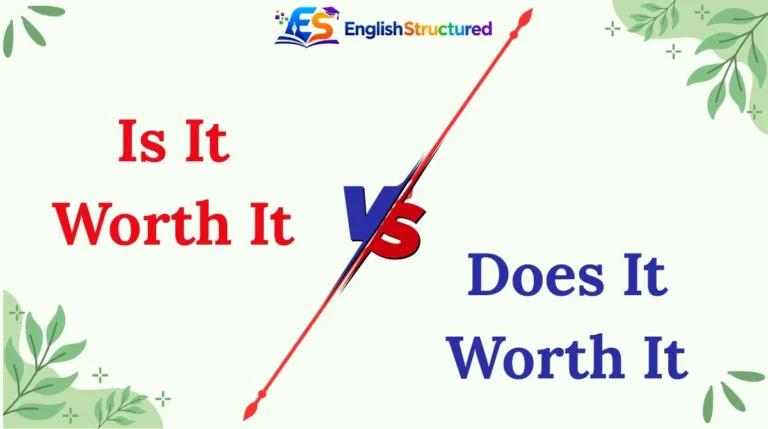
Is It Worth It vs Does It Worth It
Many English learners hear this phrase in conversations or read it online, so they believe it is correct. However, this expression does not follow standard English grammar.
The correct phrase is “Is it worth it?” Native English speakers use this question every day when they want to know if something has enough value, benefit, or importance.
Whether you are talking about buying a new phone, studying for an exam, traveling to another country, or spending your time on a hobby, this simple question appears in everyday conversations.
Understanding this grammar point is very important because using the wrong form can make your English sound unnatural.
Once you know why “is” is correct and “does” is incorrect, you will avoid a mistake that many learners make.
By the end of this guide, you will understand the meaning of both expressions, learn the grammar behind them, see plenty of real-life examples, compare the two forms side by side, and feel confident using the correct expression in speaking and writing.
What Does “Is It Worth It?” Mean?
The phrase “Is it worth it?” is a common English question. It asks whether something has enough value, benefit, or reward to make the time, money, effort, or risk worthwhile.
In simple words, the question means:
- Is it a good idea?
- Is the result good enough?
- Is the effort worthwhile?
- Is it valuable?
People use this expression every day in both formal and informal conversations.
Simple Definition
“Is it worth it?” means:
Does something have enough value or benefit to make it a good choice?
It is one of the most natural ways to ask about value or usefulness.
When Do We Use “Is It Worth It?”
Use this question when you want to know if something deserves your:
- Time
- Money
- Energy
- Effort
- Patience
- Risk
The answer can be yes or no, depending on the situation.
For example:
- Is this expensive laptop worth it?
- Is the movie worth it?
- Is learning Spanish worth it?
- Is the long drive worth it?
- Is the extra practice worth it?
Grammar Rule
This sentence follows a very simple grammar pattern.
Structure:
Is + subject + worth + noun/pronoun?
Examples:
- Is it worth the money?
- Is this book worth reading?
- Is the trip worth the cost?
- Is the wait worth it?
Is It Worth It vs Does It Worth It
Because worth is an adjective, we use the verb “be” (is, am, are, was, were) before it.
That is why we say:
- ✔ Is it worth it?
- ✔ It is worth it.
- ✔ The game is worth playing.
Not:
- ✘ Does it worth it?
- ✘ It does worth it.
Why “Worth” Uses the Verb “Be”
Is It Worth It vs Does It Worth It
Actually, it is an adjective.
Look at these examples.
- The book is interesting.
- The food is delicious.
- The lesson is useful.
- The trip is worth it.
Just like interesting, delicious, and useful, the word worth describes something.
Since adjectives usually follow the verb be, we say:
- Is It Worth It vs Does It Worth It
- The experience was worth it.
- The ticket is worth the price.
8 Example Sentences
Here are some everyday examples.
- Is this online course worth it?
- The vacation was worth every dollar.
- Is the new phone worth buying?
- The long wait was worth it.
- I think the extra practice is worth it.
- Is the premium plan worth the money?
- The difficult exam was worth all my hard work.
- This restaurant is definitely worth visiting.
These are all natural English sentences that native speakers use.
Common Learner Confusion
Many students become confused because they already know that does is often used in questions.
For example:
- Does he work here?
- Is It Worth It vs Does It Worth It
- Does your brother drive?
Is It Worth It vs Does It Worth It
That is not true.
Is It Worth It vs Does It Worth It
Examples:
- Do you play football?
- Does she study English?
- Does he cook dinner?
However, worth is not an action verb.
It is an adjective.
Therefore, it cannot use do or does.
Instead, it must use the verb be.
Correct:
- Is it worth it?
- Is It Worth It vs Does It Worth It
- Are these shoes worth the price?
Incorrect:
- Does it worth it?
- Is It Worth It vs Does It Worth It
Other Natural Expressions with “Worth”
Is It Worth It vs Does It Worth It
For example:
- worth the money
- worth the effort
- Is It Worth It vs Does It Worth It
- worth trying
- worth reading
- worth watching
- worth visiting
- worth keeping
- worth discussing
- worth remembering
Examples:
- This movie is worth watching.
- The museum is worth visiting.
- The article is worth reading.
- The project is worth discussing.
- The lesson is worth remembering.
These expressions are extremely common in spoken and written English.
“Worth It” in Everyday Conversation
You will hear this phrase almost everywhere.
At work
Is It Worth It vs Does It Worth It
B: Yes. I learned many useful skills.
Shopping
A: Is this jacket worth it?
B: I think so. The quality is excellent.
School
A: Is studying every evening worth it?
B: Yes. My grades improved a lot.
Travel
A: Is the long flight worth it?
B: Absolutely. The beaches are amazing.
Entertainment
A: Is the movie worth it?
B: Yes. It is one of the best films this year.
Is It Worth It vs Does It Worth It
What Does “Does It Worth It?” Mean?
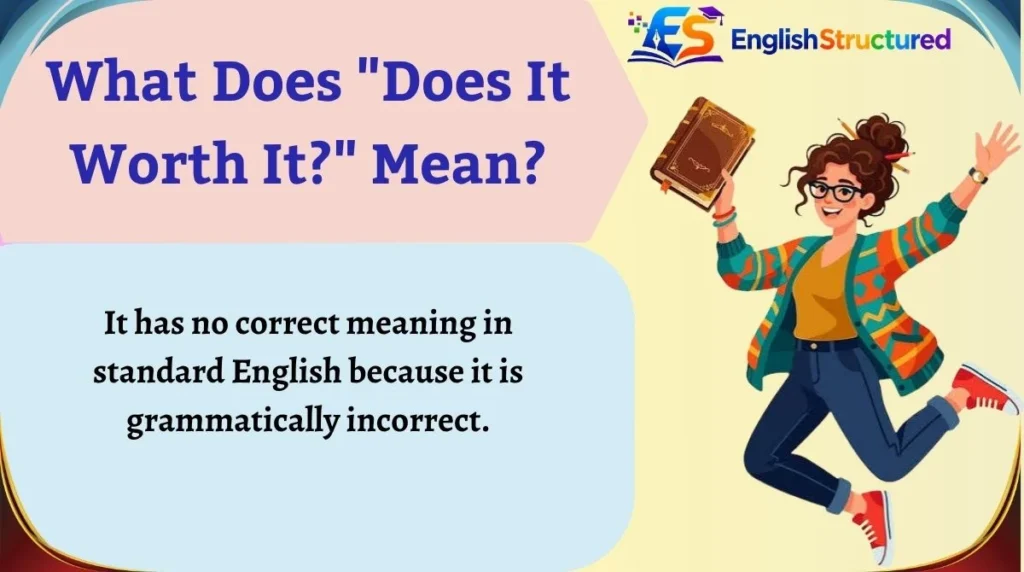
The short answer is simple:
It has no correct meaning in standard English because it is grammatically incorrect.
Many learners search for this expression because they hear it from other learners, see it on social media, or translate directly from their first language. While people may understand what the speaker is trying to ask, native English speakers do not use this sentence.
Instead, they say:
- Is It Worth It vs Does It Worth It
or, depending on the context:
- Is it worth the money?
- Is It Worth It vs Does It Worth It
- Is it worth trying?
- Is it worth the effort?
The reason is simple: worth is an adjective, not a verb. Because of that, it cannot follow the auxiliary verb does.
Difference Between “Is It Worth It?” and “Does It Worth It?” (Detailed)
Understanding the difference becomes easy once you know the job of each word in the sentence. The biggest mistake is thinking that worth is a verb. It is not. It is an adjective, so it needs a form of the verb be.
Comparison Table
| Feature | Is it worth it? | Does it worth it? |
|---|---|---|
| Grammar | ✅ Correct | ❌ Incorrect |
| Used by native speakers | Yes | No |
| Uses the verb be | Yes | No |
| Uses auxiliary does | No | Yes (incorrectly) |
| Sounds natural | Yes | No |
| Suitable for exams | Yes | No |
| Suitable for formal writing | Yes | No |
| Suitable for everyday conversation | Yes | No |
Usage Difference
Is It Worth It vs Does It Worth It
Examples:
- Is this course worth it?
- Is the trip worth it?
- Is the extra work worth it?
These questions sound completely natural.
Is It Worth It vs Does It Worth It. Although someone may understand your meaning, native speakers usually notice that the sentence is incorrect.
Grammar Logic
Think about these sentences:
- The cake is delicious.
- The weather is beautiful.
- The book is interesting.
- The movie is worth it.
All the highlighted words describe something. They are adjectives, so they follow the verb be.
Now compare them:
Is It Worth It vs Does It Worth It
❌ Does the weather beautiful?
❌ Does the movie worth it?
They all sound wrong because does cannot be used before an adjective.
Sentence Structure Difference
Correct structure:
Is It Worth It vs Does It Worth It
Examples:
- Is it worth the money?
- Was the trip worth the time?
- Are these shoes worth the price?
Incorrect structure:
Does + Subject + Worth
Examples:
- ❌ Does it worth it?
- ❌ Does this book worth buying?
- ❌ Does the game worth playing?
Meaning Comparison
Although learners usually intend the same meaning, only one sentence is grammatically correct.
| Incorrect Question | Correct Question |
|---|---|
| Does it worth it? | Is it worth it? |
| Does this phone worth buying? | Is this phone worth buying? |
| Does the movie worth watching? | Is the movie worth watching? |
| Does the trip worth the money? | Is the trip worth the money? |
| Does this class worth taking? | Is this class worth taking? |
Whenever you want to ask about value, benefit, or importance, remember that worth needs is, are, was, or were.
Grammar Rules You Must Remember
Learning a few simple rules will help you avoid this mistake forever.
Rule #1: “Worth” Is an Adjective
Is It Worth It vs Does It Worth It
Because adjectives follow the verb be, you should say:
- The game is worth it.
- This idea is worth discussing.
- The ticket was worth the price.
Never use does before worth.
Rule #2: Use “Be” Before “Worth”
Whenever you use worth, choose the correct form of be.
Examples:
- It is worth it.
- They are worth keeping.
- The trip was worth the wait.
- These lessons were worth studying.
The form of be changes with the subject and tense.
Rule #3: Use “-ing” After “Worth” When Talking About Actions
Is It Worth It vs Does It Worth It
Correct:
- The movie is worth watching.
- Is It Worth It vs Does It Worth It
- The city is worth visiting.
- The idea is worth trying.
Incorrect:
- ❌ The movie is worth watch.
- ❌ The book is worth read.
- ❌ The city is worth visit.
Rule #4: “Do” and “Does” Are Used with Action Verbs
Is It Worth It vs Does It Worth It
Examples:
- Does she play tennis?
- Does he work here?
- Do they study English?
- Do you like coffee?
Do not use do or does before adjectives like:
- happy
- busy
- ready
- worth
- available
- afraid
Correct:
- Is she happy?
- Is he ready?
- Is it worth it?
Common Mistakes Students Make
This grammar point causes problems for many English learners because the mistake often comes from translation or overusing does in questions.
Mistake 1: Using “Does” with “Worth”
❌ Does it worth it?
✅ Is it worth it?
Is It Worth It vs Does It Worth It
Mistake 2: Forgetting the Verb “Be”
❌ It worth the money.
Is It Worth It vs Does It Worth It
Every complete English sentence needs a verb. Here, the verb is is.
Mistake 3: Using the Base Verb After “Worth”
❌ This movie is worth watch.
✅ This movie is worth watching.
Always use the -ing form after worth when talking about an action.
Mistake 4: Translating Directly from Your First Language
Some languages form questions differently, so learners naturally say:
❌ Does it worth it?
Instead of:
✅ Is it worth it?
English grammar has its own sentence patterns, so direct translation often creates mistakes.
Easy Correction Tips
Is It Worth It vs Does It Worth It
- Is worth describing something?
- Am I using a form of be?
- Did I accidentally use does?
- If there is a verb after worth, is it ending in -ing?
If the answer is yes, your sentence is probably correct.
Easy Trick to Remember the Difference
Here is a simple memory trick that many students find helpful.
Is It Worth It vs Does It Worth It
- useful
- expensive
- beautiful
- important
- interesting
We say:
- It is useful.
- It is beautiful.
- It is important.
We never say:
- ❌ Does it useful?
- ❌ Does it beautiful?
- Is It Worth It vs Does It Worth It
Is It Worth It vs Does It Worth It
So remember this sentence:
Worth always likes the verb “be.”
If you remember that one idea, you will naturally say:
- It is worth it.
- Is it worth it?
- The trip was worth it.
- These books are worth reading.
Instead of:
- Is It Worth It vs Does It Worth It
Another easy shortcut is this:
Is It Worth It vs Does It Worth It
For example:
- It is valuable.
- It is worth it.
The grammar stays exactly the same.
Daily Life Examples
Is It Worth It vs Does It Worth It. is to see how native speakers use it in everyday conversations. These examples are simple, natural, and easy to understand.
Example 1: Buying a New Phone
Emma: This phone is very expensive. Is it worth it?
Liam: Yes. The camera is excellent, and the battery lasts all day.
Example 2: Studying for an Exam
Sara: Is studying two extra hours every night worth it?
Teacher: Yes. Consistent practice usually leads to better results.
Example 3: Watching a Movie
Alex: Is the new movie worth watching?
Mia: Definitely. The story is exciting from beginning to end.
Example 4: Learning a New Skill
Ben: Is learning to code worth it?
David: Yes. It can help you find many career opportunities.
Example 5: Traveling
Anna: The flight takes twelve hours. Is the trip worth it?
Lucy: Absolutely. The scenery is beautiful, and the experience is unforgettable.
Example 6: Buying an Online Course
Student: Is this English course worth the money?
Instructor: Yes. It includes live classes, practice exercises, and personal feedback.
Example 7: Reading a Book
James: Is this novel worth reading?
Sophia: Yes. The characters are interesting, and the ending is amazing.
Example 8: Joining a Gym
Mark: Is joining this gym worth it?
Friend: Yes. The equipment is modern, and the trainers are very helpful.
Example 9: Working Overtime
Employee: Is working overtime this weekend worth it?
Manager: You’ll receive extra pay, so many people think it is.
Example 10: Learning English
Student: Is learning English worth all the effort?
Teacher: Of course. It opens doors to education, travel, and better job opportunities.
Practice Section
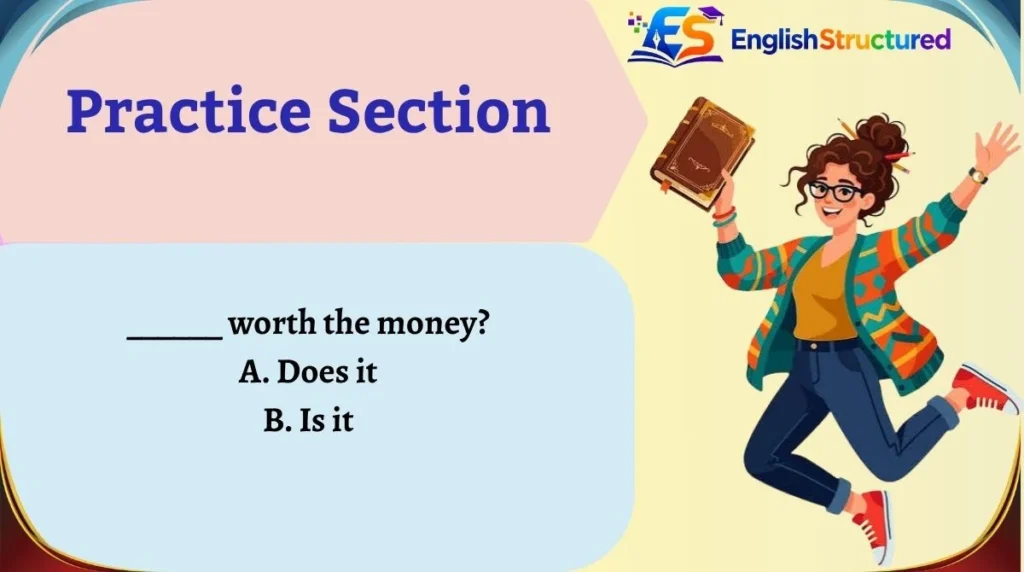
Choose the correct option in each sentence.
1. ______ worth the money?
A. Does it
B. Is it
2. This movie is worth ______.
A. watch
B. watching
3. ______ these shoes worth buying?
A. Are
B. Do
4. The long trip ______ worth it.
A. was
B. did
5. Is this book worth ______?
A. reading
B. read
Answers
- B. Is it
- B. watching
- A. Are
- A. was
- A. reading
If you answered all five correctly, you have understood the grammar rule very well. If not, review the sections above and practice using worth with the correct form of the verb be.
FAQs
1. What is the difference between “Is it worth it?” and “Does it worth it?”
Is It Worth It vs Does It Worth It
2. Can we use “does” before “worth”?
No. Does is used with action verbs such as play, eat, work, or study. Since worth is not a verb, does cannot be used before it.
Correct:
- Is it worth it?
Incorrect:
- Does it worth it?
3. Is “worth” a verb or an adjective?
Worth is an adjective. It describes the value or usefulness of something.
Examples:
- The book is worth reading.
- The trip was worth the cost.
- This idea is worth discussing.
4. Can I say “It is worth buying”?
Yes. This is a very common and correct sentence. After worth, use the -ing form of a verb when talking about an action.
Examples:
- It is worth buying.
- It is worth trying.
- It is worth visiting.
- It is worth reading.
5. Is “Is it worth it?” formal or informal?
It works in both formal and informal English. You can use it in everyday conversations, business discussions, classroom situations, emails, and professional writing.
6. Why do so many learners say “Does it worth it?”
This mistake usually happens because learners overuse does when making questions or translate directly from their native language. Once you remember that worth is an adjective, the correct form becomes much easier to use.
Conclusion
Is It Worth It vs Does It Worth It
However, the grammar rule is simple once you understand the role of the word worth.
Since worth is an adjective, it always needs a form of the verb be, such as is, are, was, or were.
Whenever you want to ask whether something has enough value, benefit, or importance, the correct question is “Is it worth it?”
Avoid using “Does it worth it?” because it is not accepted in standard English grammar.
The best way to master this expression is through regular practice. Read English books, listen to native speakers, and try using worth in your own conversations.
The more you practice, the more natural it will become.
Before long, choosing the correct expression will feel easy and automatic, helping you speak and write English with greater confidence and accuracy.