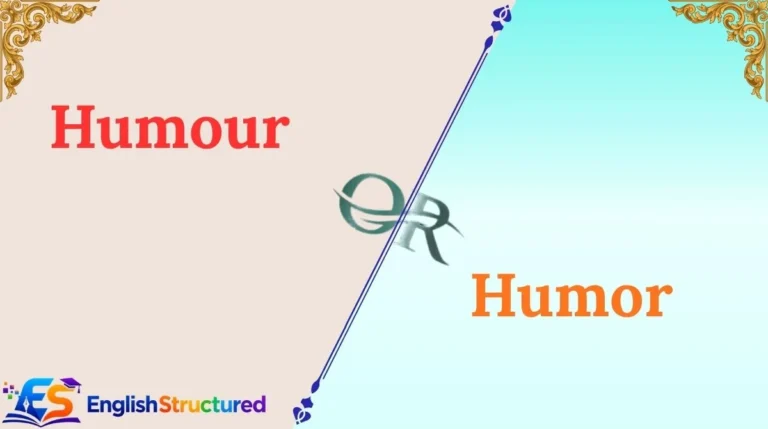
Humour or Humor
The difference is not about meaning. It is mainly about where the English is used.
This spelling difference often confuses English learners. You might read humour in a British novel but see humor on an American website.
Since both forms appear online, in books, and on social media, it can be hard to know which one to choose.
Learning the difference is important because it helps your writing look natural, consistent, and professional.
If you are writing for school, work, or an English exam, using the correct spelling for your audience makes a good impression.
The good news is that the grammar is very easy. Once you understand the spelling rule, you will know exactly when to use each word.
You will also learn how native speakers use these words in everyday conversations and writing.
By the end of this guide, you will clearly understand the meaning of both spellings, when to use them, the grammar rules behind them, common mistakes to avoid, and simple tricks to remember the difference.
What Does “Humour” Mean?
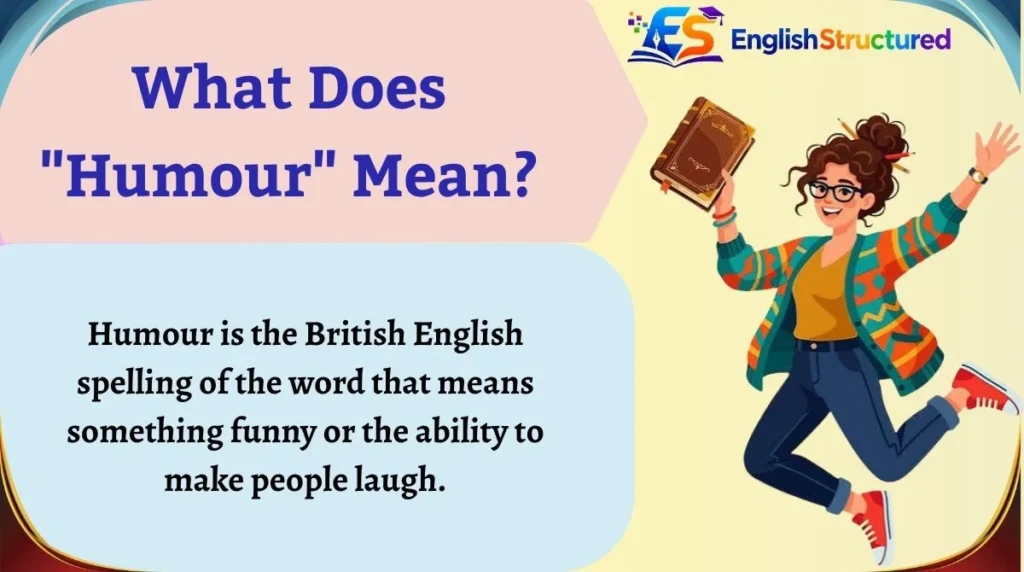
Humour is the British English spelling of the word that means something funny or the ability to make people laugh. It can also describe a person’s cheerful or playful personality.
People in countries such as the United Kingdom, Australia, New Zealand, Ireland, and many other Commonwealth nations usually write humour instead of humor.
Simple Definition
Humour means:
- The quality of being funny.
- Something that makes people laugh.
- A person’s ability to see or create funny situations.
When to Use “Humour”
Humour or Humor
Examples include:
- British newspapers
- UK schools and universities
- Australian publications
- British English exams such as IELTS (when using British spelling consistently)
Grammar Rule
Humour or Humor
Correct:
- Humour or Humor
- His humour makes everyone smile.
Humour or Humor
Example:
- Dark humour is not for everyone.
Example Sentences
- Emma has an excellent sense of humour.
- Humour or Humor
- Good humour can make difficult days easier.
- The teacher used humour to keep the class interested.
- His quiet humour surprised everyone.
- Children enjoy stories full of humour.
- Humour or Humor
- They appreciated his clever humour during the meeting.
Common Learner Confusion
Humour or Humor
Both words have exactly the same meaning.
The only real difference is the spelling, which depends on whether you are using British English or American English.
For example:
- Humour or Humor
- American English: I enjoy her sense of humor.
Both sentences are completely correct.
Common Expressions with “Humour”
Here are some expressions often used in British English:
- Humour or Humor
- Good humour
- Dry humour
- Black humour
- Gentle humour
- Great humour
Examples:
- She never loses her sense of humour.
- He accepted the joke with good humour.
- Humour or Humor
What Does “Humor” Mean?
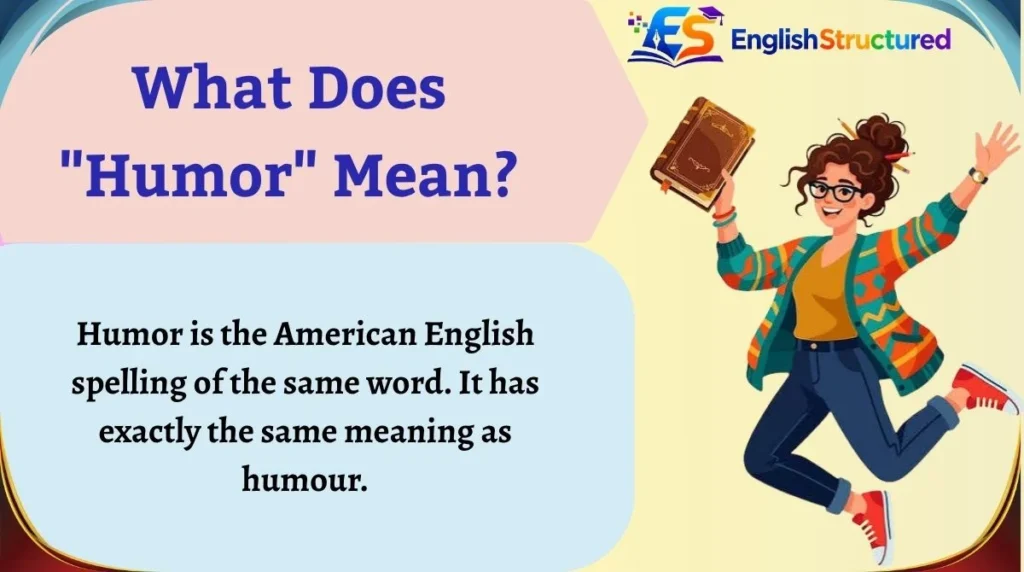
Humor is the American English spelling of the same word. It has exactly the same meaning as humour. The only difference is that American English removes the letter “u” from many words ending in -our.
Humour or Humor
Simple Definition
Humor means:
- The ability to make people laugh.
- Something funny.
- A funny way of looking at life.
When to Use “Humor”
Humour or Humor
It is commonly used in:
- American schools
- US businesses
- American newspapers
- American websites
- Most US publishers
Grammar Rule
Like humour, humor is mainly an uncountable noun.
Examples:
- She has a wonderful sense of humor.
- His humor always makes the office happier.
It can also describe different kinds of humor.
Example:
- Political humor often reflects current events.
Example Sentences
- Humour or Humor
- Her humor helped everyone relax.
- The movie is full of smart humor.
- Good humor can improve friendships.
- His humor made the meeting enjoyable.
- Humour or Humor
- Children usually enjoy playful humor.
- Humour or Humor
Common Learner Confusion
Humour or Humor
That is incorrect.
Both spellings are modern and widely accepted today. The correct choice depends only on the variety of English you are using.
Another mistake is mixing both spellings in one document.
For example:
Humour or Humor
It is better to stay consistent.
British English:
✔ The book has great humour, and the author’s humour is easy to understand.
American English:
Humour or Humor
Common Expressions with “Humor”
These expressions are common in American English:
- Sense of humor
- Good humor
- Humour or Humor
- Dry humor
- Humour or Humor
- Great humor
Examples:
- Everyone likes her sense of humor.
- Humour or Humor
- The comedian is known for dry humor.
Difference Between Humour and Humor (Detailed)
Many English learners spend time trying to find a difference in meaning between humour and humor. The truth is very simple. There is no difference in meaning. They both describe something funny, the ability to make people laugh, or a person’s funny personality.
The only real difference is the spelling, which depends on the type of English you are using.
- Humour or Humor
- Humor is the standard spelling in American English.
Humour or Humor. If you are writing for an American audience, choose humor. Once you choose one style, use it throughout your writing.
Comparison Table
| Feature | Humour | Humor |
|---|---|---|
| English variety | British English | American English |
| Meaning | Ability to make people laugh | Ability to make people laugh |
| Part of speech | Noun | Noun |
| Pronunciation | Same | Same |
| Grammar | Same | Same |
| Everyday use | UK, Australia, New Zealand, Ireland | United States |
| Formal writing | Yes | Yes |
| Informal writing | Yes | Yes |
Meaning Comparison
Although the spellings are different, the meaning never changes.
Humour or Humor
- Funny ideas
- Funny stories
- Ability to laugh
- Cheerful personality
Humor
- Funny ideas
- Funny stories
- Ability to laugh
- Cheerful personality
No matter which spelling you use, readers will understand the same idea.
Usage Difference
The biggest difference is where each spelling is used.
Choose humour if your readers are in countries that follow British English.
Examples:
- British magazines
- UK universities
- Australian schools
- British newspapers
Humour or Humor
Examples:
- American colleges
- US businesses
- American books
- American news websites
Grammar Logic
Both words follow exactly the same grammar rules.
They are usually uncountable nouns.
Examples:
- Humour or Humor
- She has a wonderful sense of humor.
Both sentences are grammatically correct.
Sometimes they describe different styles.
Examples:
- Humour or Humor
- American humor includes many kinds of comedy.
Sentence Structure Difference
The sentence structure never changes.
Only the spelling changes.
British English
- Subject + verb + humour
- Humour or Humor
American English
- Humour or Humor
- The speaker used humor to entertain the audience.
Another example:
British English
- We enjoy clever humour.
American English
- We enjoy clever humor.
Related British and American Spellings
The same spelling pattern appears in many English words.
| British English | American English |
|---|---|
| humour | humor |
| colour | color |
| favourite | favorite |
| neighbour | neighbor |
| flavour | flavor |
| labour | labor |
| honour | honor |
If you already know these spelling pairs, remembering humour and humor becomes much easier.
Which Spelling Should You Choose?
Choose one spelling based on your audience.
Use humour if:
- You write in British English.
- Your school follows British spelling.
- Your exam accepts or prefers British English.
- Your readers are mainly in the UK or other Commonwealth countries.
Use humor if:
- You write in American English.
- Your readers are in the United States.
- Your company uses American spelling.
- Your website follows US English.
The most important rule is consistency. Do not switch between the two spellings in the same document unless you are explaining the difference.
Grammar Rules You Must Remember
Humour or Humor. Remembering a few simple rules will help you use them correctly every time.
Rule #1: Choose One English Style
Humour or Humor
Correct
- British English: She has a lovely sense of humour.
- American English: She has a lovely sense of humor.
Avoid mixing both spellings in the same piece of writing.
Rule #2: Usually Use It as an Uncountable Noun
Most of the time, these words are uncountable.
Correct
- His humor is very natural.
- Her humour makes everyone smile.
Incorrect
- He has many humors. ❌
Humour or Humor
Rule #3: Use Common Expressions Correctly
Many fixed expressions include these words.
Examples:
- Humour or Humor
- good humour / good humor
- dry humour / dry humor
- Humour or Humor
- great humour / great humor
Example sentences:
- She has a great sense of humour.
- My uncle enjoys dry humor.
- Humour or Humor
Rule #4: Keep the Same Spelling Throughout Your Writing
If you begin with British spelling, continue using British spelling.
If you begin with American spelling, continue using American spelling.
Correct
- The article discusses humour.
- Humour or Humor
Correct
- Humour or Humor
- American humor is often fast and direct.
Incorrect
- British humour is famous, and American humour uses the spelling humor in this article. ❌
Stay consistent unless your purpose is to compare the two spellings.
Common Mistakes Students Make
Many learners understand the meaning of these words but still make small spelling mistakes. Here are the most common ones and how to avoid them.
Mistake 1: Thinking the Meanings Are Different
Humour or Humor
Wrong idea
- Humour is polite.
- Humor is casual.
This is incorrect.
Correct
Both spellings have exactly the same meaning.
Mistake 2: Mixing British and American Spellings
This happens very often in essays and online writing.
Wrong
- Her humour is wonderful, and everyone loves her humor.
Correct (British English)
- Her humour is wonderful, and everyone loves her humour.
Correct (American English)
- Humour or Humor
Mistake 3: Using the Wrong Spelling for Your Audience
Imagine you are writing for an American company.
Using humour may look unusual because American readers expect humor.
Humour or Humor
Always think about who will read your writing.
Mistake 4: Forgetting Other British and American Spellings
Students often write:
- colour
- favorite
- neighbour
- humor
This mixes two spelling systems.
Instead, keep everything in one style.
British English:
- colour
- favourite
- neighbour
- Humour or Humor
American English:
- color
- favorite
- neighbor
- Humour or Humor
Mistake 5: Believing One Spelling Is More Correct
Neither spelling is better.
Both are accepted by English dictionaries around the world.
The important thing is choosing the spelling that matches your audience.
Easy Correction Tips
If you often confuse these spellings, try these simple habits.
- Decide whether you are writing British or American English before you begin.
- Keep a list of common spelling differences.
- Use the same spelling from beginning to end.
- Read books from your chosen variety of English.
- Check your spelling before submitting school or work assignments.
Small habits like these quickly improve your writing.
Easy Trick to Remember the Difference
Many students remember the rule in just a few seconds by using a simple memory trick.
Memory Trick 1: Think About the Letter “U”
Humour or Humor
British English likes to keep the “u” in many words.
Examples:
- colour
- favourite
- neighbour
- Humour or Humor
- humour
American English usually removes that extra letter.
Examples:
- color
- favorite
- neighbor
- honor
- Humour or Humor
If you remember this pattern, you can spell many words correctly.
Memory Trick 2: Match the Country
Think of these pairs:
- Britain → Humour
- Humour or Humor
One country, one spelling.
Memory Trick 3: Remember the Family of Words
Place these words together in your mind.
British English
- colour
- flavour
- labour
- Humour or Humor
- humour
American English
- color
- flavor
- labor
- honor
- humor
When you remember one spelling pair, the others become easier too.
Memory Trick 4: Read What Native Speakers Write
Humour or Humor
If you read American books, blogs, or magazines, you will often see humor.
Regular reading is one of the fastest ways to make the correct spelling feel natural.
Daily Life Examples
Humour or Humor. The meaning stays the same. Only the spelling changes based on whether you are using British English or American English.
Below are common examples that sound natural in daily conversations.
Everyday Spoken English Examples
- She always has a great sense of humour. (British English)
- He has a great sense of humor. (American English)
- Humour or Humor
- The teacher used humor to make the lesson more interesting. (American English)
- Good humour helps people stay positive during difficult times. (British English)
- His humor made everyone smile during the meeting. (American English)
- I enjoy books with gentle humour. (British English)
- Humour or Humor
- Even after losing the game, she stayed in good humour. (British English)
- His sense of humor is one of his best qualities. (American English)
Short Conversation Examples
Conversation 1 (British English)
Anna: Your brother is really funny.
Humour or Humor
Conversation 2 (American English)
Tom: Why does everyone enjoy working with Sarah?
Ben: Because she has a wonderful sense of humor.
Conversation 3 (British English)
Teacher: The lesson was difficult.
Humour or Humor
Conversation 4 (American English)
Emma: That presentation was excellent.
Jake: Thanks. I tried to add a little humor to keep everyone interested.
Practice Section
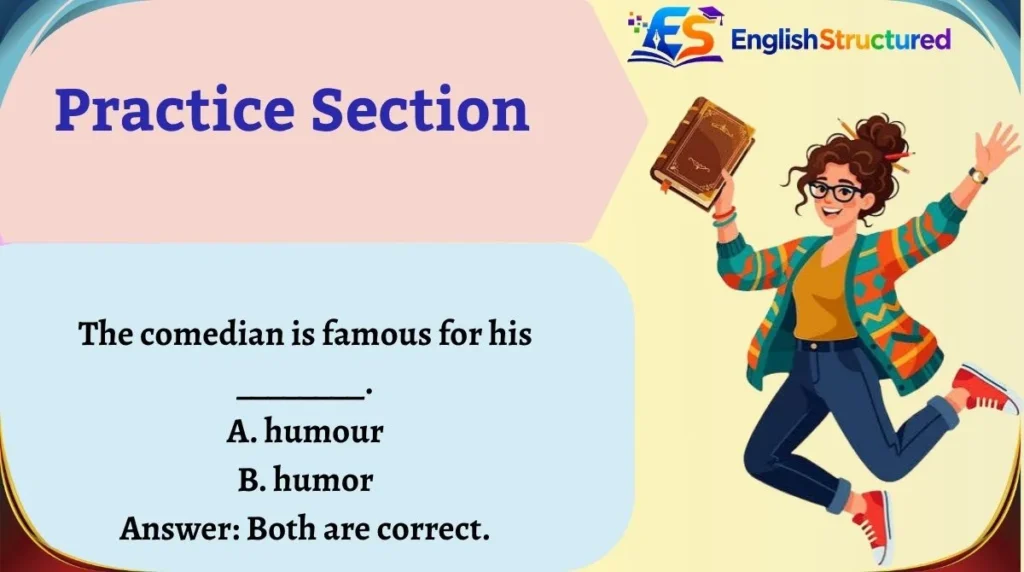
Choose the correct word in each sentence.
Question 1
The comedian is famous for his ________.
A. humour
B. humor
Answer: Both are correct. Use humour in British English and humor in American English.
Question 2
She has a wonderful sense of ________.
A. Humour or Humor
B. humor
Answer: Both spellings are correct. Choose the one that matches your English style.
Question 3
British newspapers usually write ________.
A. humour
B. humor
Answer: A. humour
Question 4
American schools usually teach the spelling ________.
A. humour
B. humor
Answer: B. humor
Question 5
Which sentence is consistent?
A. His humour makes everyone laugh, and his humor is famous.
B. His humour makes everyone laugh, and his humour is famous.
Answer: B (British English)
If writing in American English, the correct sentence is:
His humor makes everyone laugh, and his humor is famous.
FAQs
What is the difference between humour and humor?
There is no difference in meaning. The only difference is the spelling. Humour or Humor.
Which spelling is correct: humour or humor?
Both spellings are correct. Choose humour if you are writing in British English and humor if you are writing in American English. Stay consistent throughout your writing.
Can I use humour and humor in the same document?
It is usually better not to mix them. Pick one spelling style and use it from beginning to end. The only exception is when you are explaining the difference between the two spellings.
Is humour more formal than humor?
No. Neither spelling is more formal. Both are accepted in formal and informal writing. The correct choice depends only on the variety of English you are using.
Do humour and humor have different pronunciations?
No. Native speakers pronounce both words in almost the same way. The difference is in the written spelling, not in the pronunciation.
How can I remember which spelling to use?
Remember that British English usually keeps the letter “u” in words like colour, honour, and humour. American English removes the “u”, giving color, honor, and humor.
Conclusion
Humour or Humor
Both words have the same meaning, the same pronunciation, and the same grammar. The only real difference is the spelling style.
If you are writing in British English, use humour. If you are writing in American English, use humor. Once you choose a spelling style, keep it consistent throughout your writing.
A simple way to remember this rule is to think about other British and American spelling pairs such as colour/color, honour/honor, and favourite/favorite.
These words follow the same pattern.
The more you read English books, articles, and websites, the more natural the correct spelling will become.
Pay attention to your audience, practice writing complete sentences, and review your work before you publish or submit it.
With regular practice, using humour and humor correctly will soon become a habit.
Small spelling choices like this can make your English writing look more accurate, more confident, and more professional.